
We’ve all been there. You spend hours perfecting a product, taking the photos, and crafting the listing, only to hit “publish” and hear… crickets. It’s easy to feel like the Etsy algorithm is a mysterious, capricious beast that picks winners and losers at random.
But the truth is, the algorithm isn’t magic—it’s a machine. And like any machine, it runs on specific inputs. If you feed it the right data, it will yield the right results.
Today, the algorithm is smarter than ever. It’s moved beyond simple keyword matching into analyzing buyer behavior and “dwell time.” If you want to rank on Page 1, you need to understand not just what the algorithm looks for, but why.
Table of Contents
- The Foundation: Context-Specific Relevance
- The Hidden Metric: Listing Quality Score
- The Trust Factor: Customer & Market Experience
- The “Thumb-Stopping” Power of Video
- The Mobile Shift: Front-Loading Your Titles
- Final Thoughts
RELATED
- Why Your Etsy Shop Isn’t Getting Sales (And How to Fix It)
- Etsy SEO Explained: How to Rank on Page One
- How to Start a Profitable Etsy Shop: The New Rules of the Game
- How to Find High-Demand, Low-Competition Keywords on Etsy
- How Long Does It Take to Get Sales on Etsy? Realistic Timelines
01. The Foundation: Context-Specific Relevance
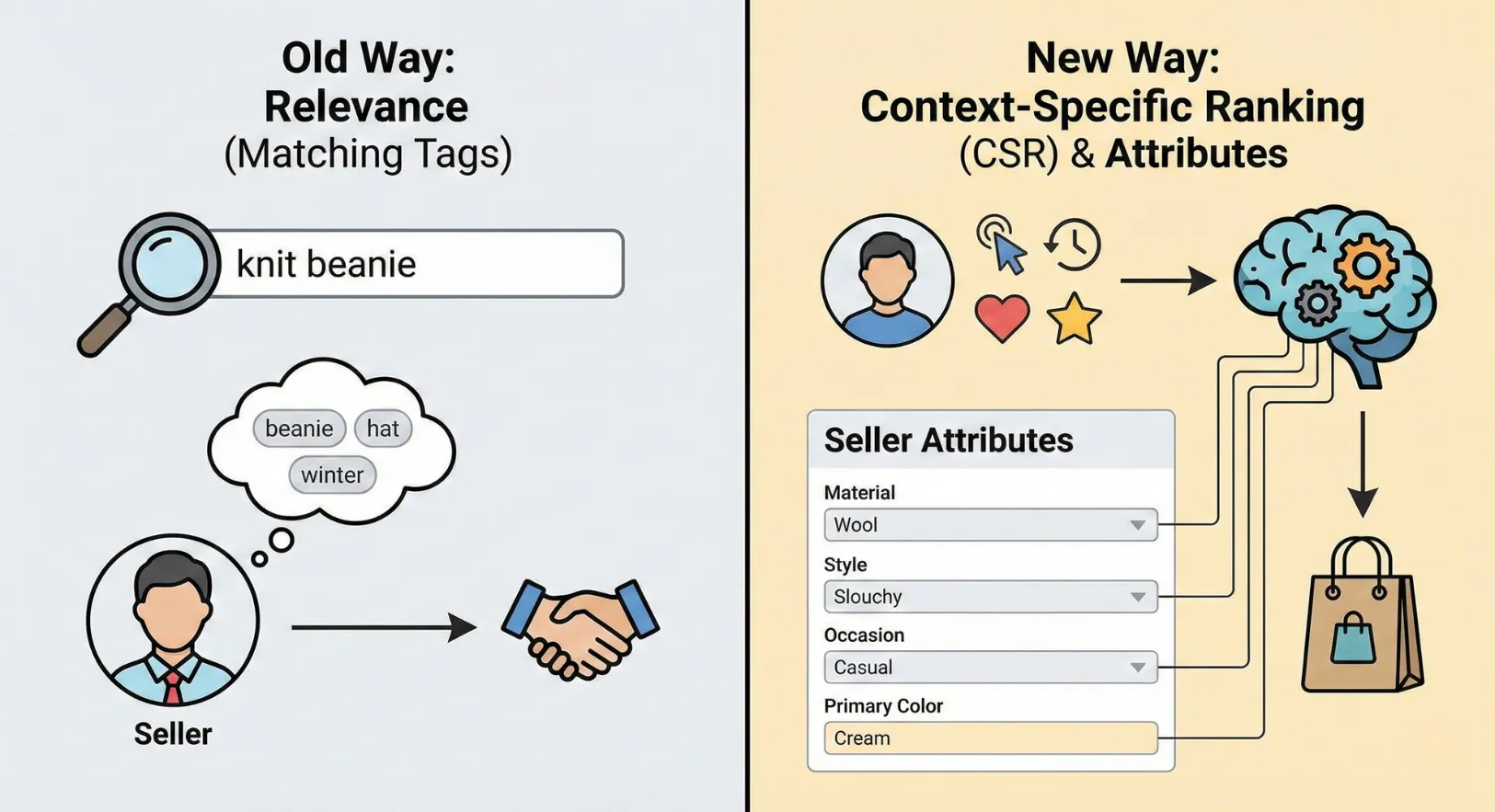
Most sellers stop at “Relevance,” which is simply matching a user’s search query to your tags and titles. But today, Etsy relies heavily on Context-Specific Ranking (CSR).
This means Etsy doesn’t just look at what the buyer typed; it looks at who the buyer is. The algorithm analyzes their past behavior—what they clicked on, what they favorited, and what they bought.
The Secret
You can’t control the buyer’s history, but you can control your Attributes. Attributes (like “Style,” “Material,” or “Occasion”) are structured data that feed the CSR engine.
If you are selling a knit beanie, don’t just put “beanie” in your tags. Fill out every single attribute field—primary color, secondary color, material (acrylic vs. wool), and style. These filters are often how the algorithm matches your item to a specific buyer’s taste profile.
02. The Hidden Metric: Listing Quality Score
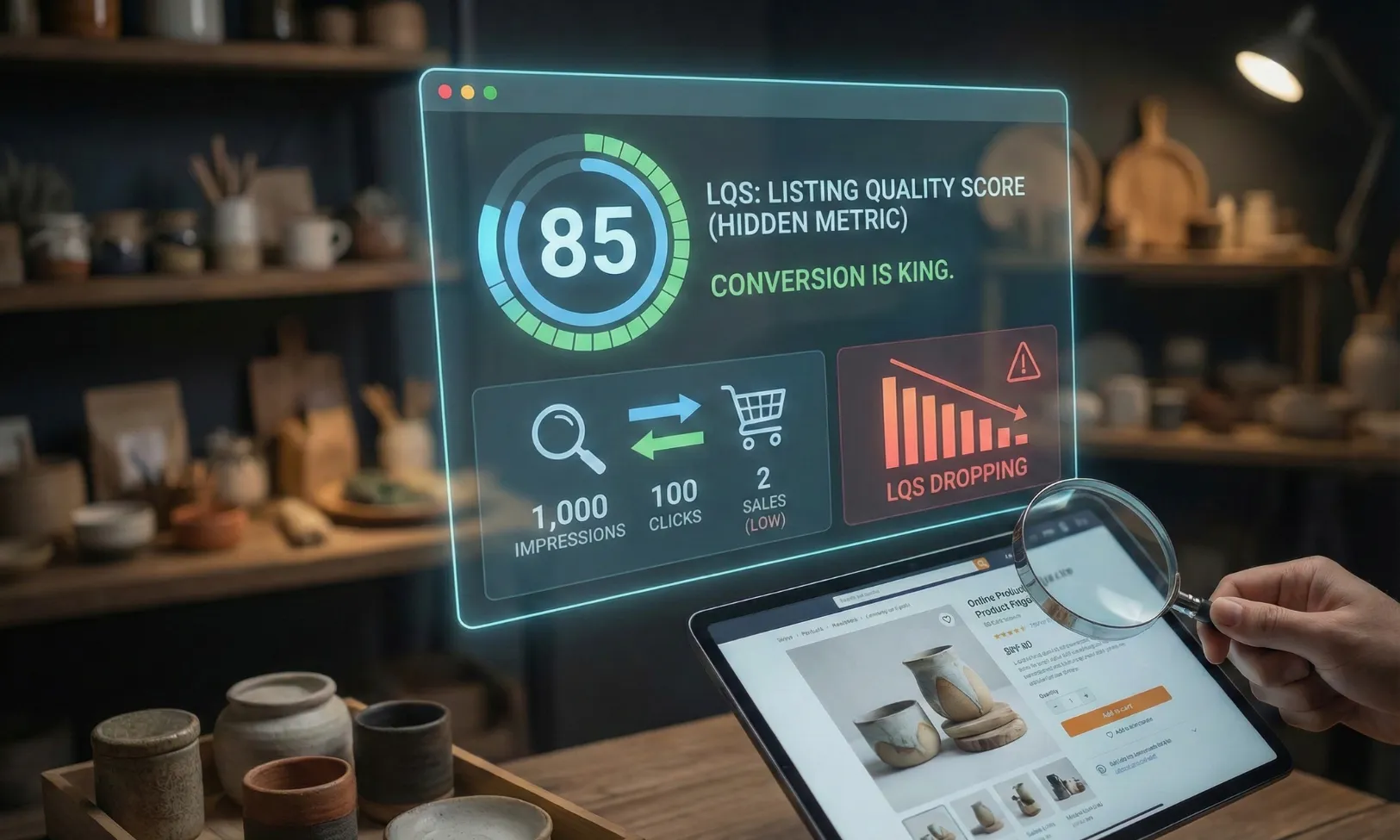
This is the score you can’t see, but it dictates your entire shop’s destiny. Every listing has a Listing Quality Score (LQS), which essentially measures how well your item converts.
If your item appears in search 1,000 times (impressions) and gets 100 clicks, that’s great. But if those 100 clicks result in zero sales, your LQS drops. The algorithm assumes your listing is irrelevant or unappealing, and it will stop showing it.
The Secret
Conversion rate is king. It is better to have lower traffic with high conversion than high traffic with zero sales. If you have a listing with thousands of views and no buys, you are likely hurting your shop’s overall standing. Fix the pricing, photos, or description to close the sale, or consider retiring the listing to stop the bleed.
03. The Trust Factor: Customer & Market Experience
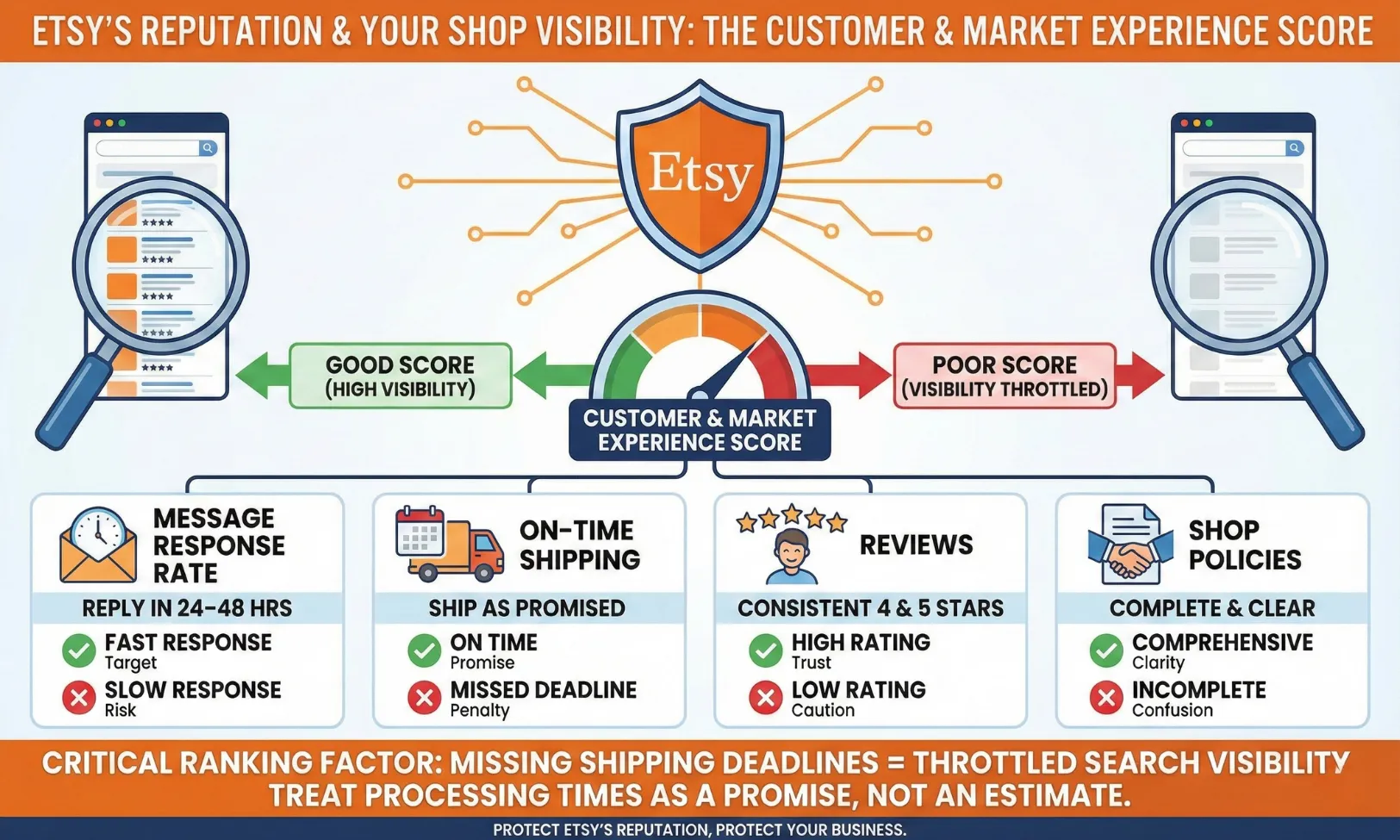
Etsy wants to protect its reputation. They will not send traffic to a shop that might result in a bad customer experience. This is where the Customer & Market Experience Score comes in.
This score looks at:
- Message Response Rate: Are you replying within 24–48 hours?
- On-Time Shipping: Are you actually shipping when you say you will?
- Reviews: Are you consistently getting 4 and 5 stars?
- Shop Policies: Are they complete?
The Secret
This isn’t just about “good service”; it is a hard ranking factor. If you miss shipping deadlines, your search visibility will be throttled. Treat your processing times as a promise, not an estimate.
04. The “Thumb-Stopping” Power of Video
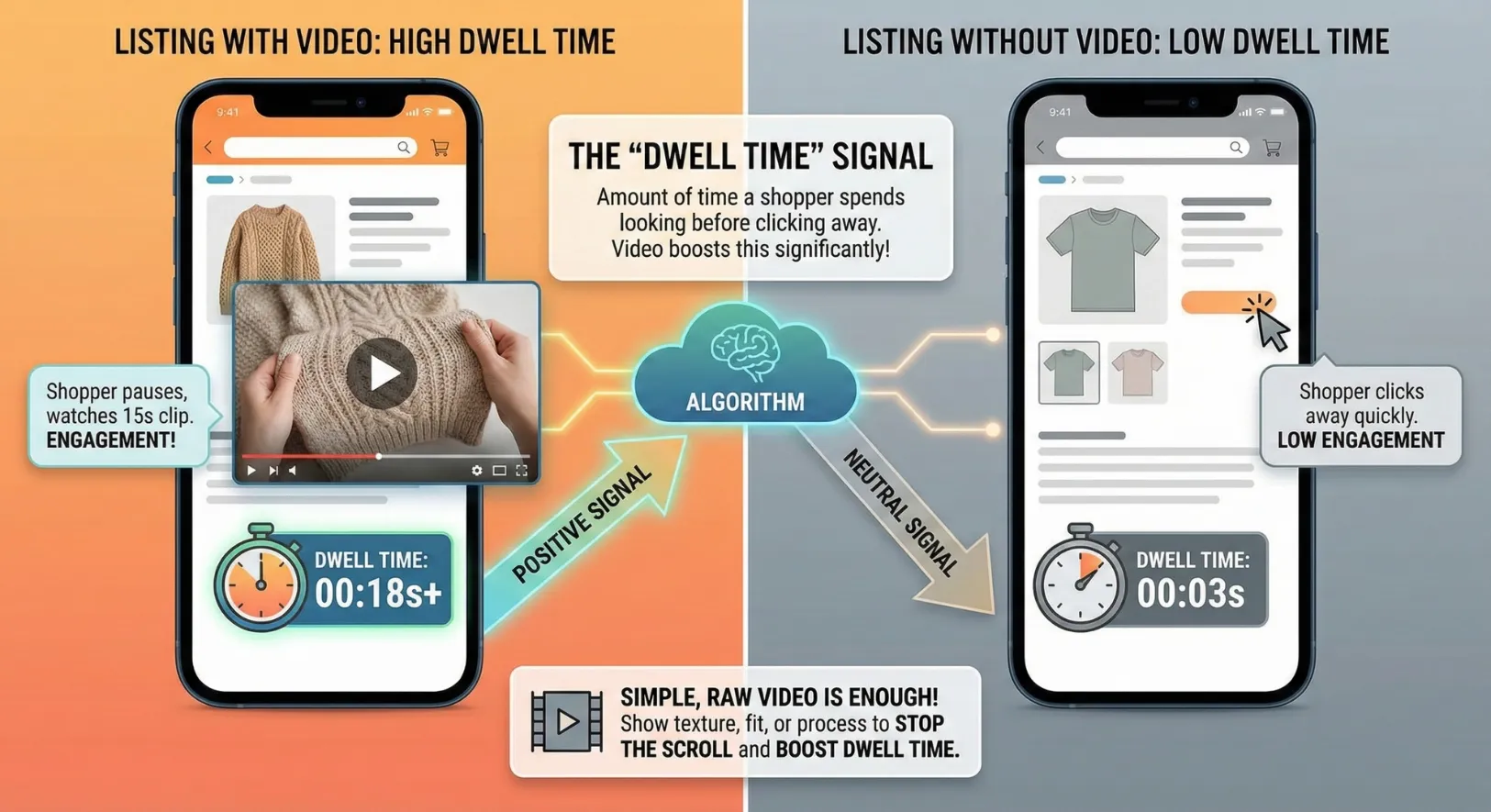
The “Dwell Time” is a massive signal. This is the amount of time a shopper spends looking at your listing before clicking away.
Listings with video have a significantly higher dwell time. When a shopper pauses to watch a 15-second clip of a product being worn or used, the algorithm registers that engagement as a positive signal of quality.
The Secret
You don’t need a cinematic masterpiece. A simple, raw video showing the texture of the fabric, how the product fits, or the packaging process is enough to stop the scroll and boost your dwell time.
05. The Mobile Shift: Front-Loading Your Titles
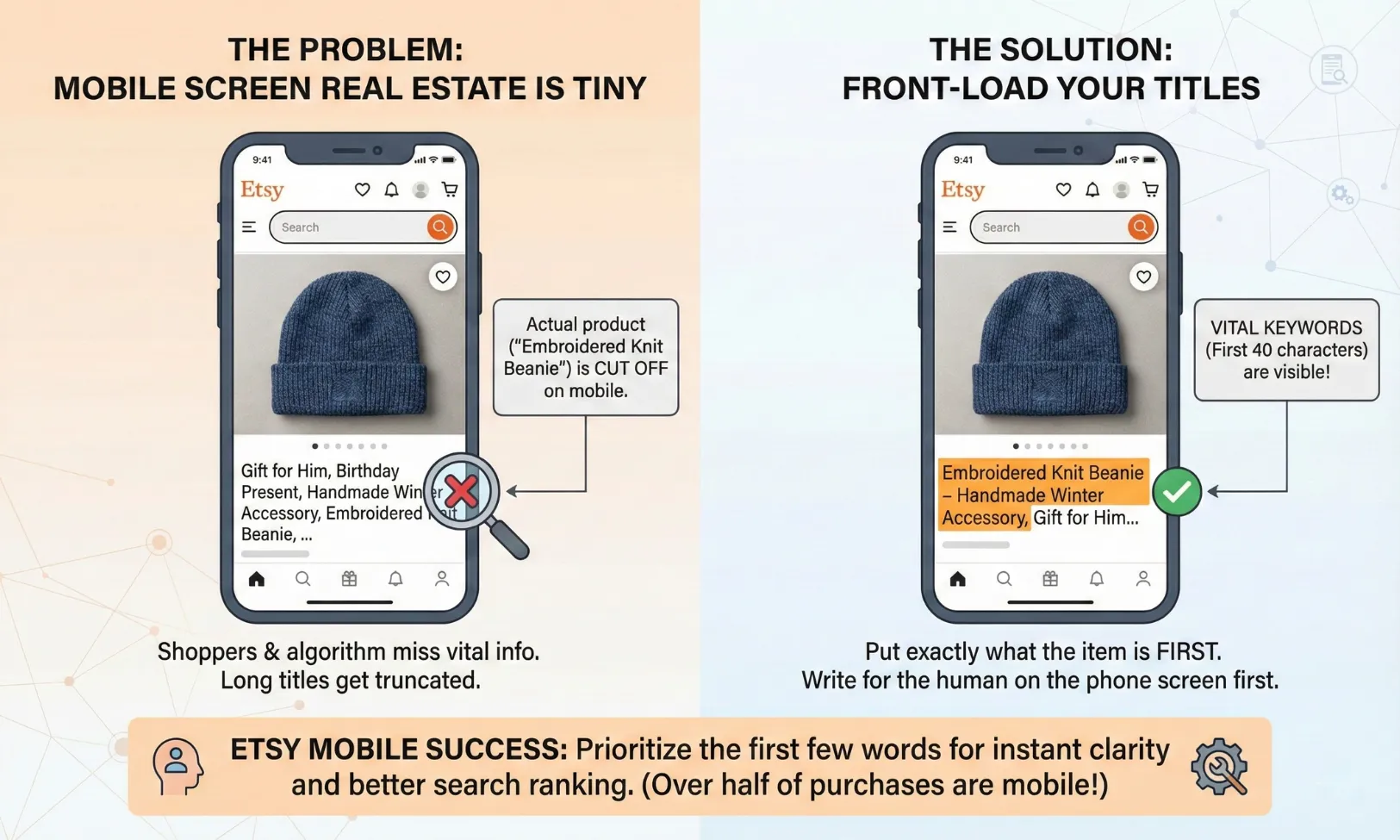
Over half of all Etsy purchases now happen on the mobile app. On mobile, the screen real estate is tiny. Shoppers (and the algorithm) prioritize the first few words of your title.
If your title is “Gift for Him, Birthday Present, Handmade Winter Accessory, Embroidered Knit Beanie,” the actual product (“Embroidered Knit Beanie”) is cut off on mobile screens.
RELATED: How to Write Etsy Titles That Actually Convert
The Secret
Front-load your titles. Put the most vital keywords—the ones that describe exactly what the item is—in the first 40 characters. Write for the human on the phone screen first, and the search engine second.
06. Final Thoughts
The Etsy algorithm isn’t trying to trick you; it’s trying to help the buyer find what they want to buy. If you focus on clarity, conversion, and customer experience, the algorithm will become your best employee rather than your biggest obstacle.
Take a look at your shop stats today. Identify your lowest converting listings and ask yourself: Is the title clear? Is the shipping time accurate? Are the attributes complete? Small tweaks in these areas can lead to massive jumps in visibility.
Happy selling!
Enjoyed this post? Share it with your friends to spread the word! We’d love to hear your thoughts—drop your feedback in the comments below!
Also Read






Leave a Reply