
The most common question I see in seller forums and get asked by new shop owners is always the same: “I opened my shop three days ago. Why haven’t I made a sale yet?”
It is the hardest part of the journey, the “crickets” phase. You’ve poured hours into product design, perfected your mockups, and finally hit publish, only to be met with silence. If you are currently refreshing your stats page every hour, hoping for that “Cha-ching!” notification, this post is for you.
Let’s talk about realistic timelines for getting traction on Etsy in the current market, and why silence in the first few weeks is actually normal.
Table of Contents
- The Short Answer: Set Your Expectations for 1-3 Months
- The “Etsy Sandbox” Effect
- The 4 Factors That Speed Up (or Slow Down) Your Timeline
- Listing Density
- The Trust Factor
- Niche Saturation
- Pricing Strategy
- What To Do While You Wait
- The Bottom Line
RELATED
- How to Start a Profitable Etsy Shop in 2026: The New Rules of the Game
- Beginner’s Guide to Etsy Selling: From Setup to First Sale
- How to Scale Your Etsy Shop Without Burning Out
01. The Short Answer: Set Your Expectations for 1-3 Months
If you browse YouTube, you might believe that everyone makes their first $1,000 in their first week. That is the exception, not the rule.
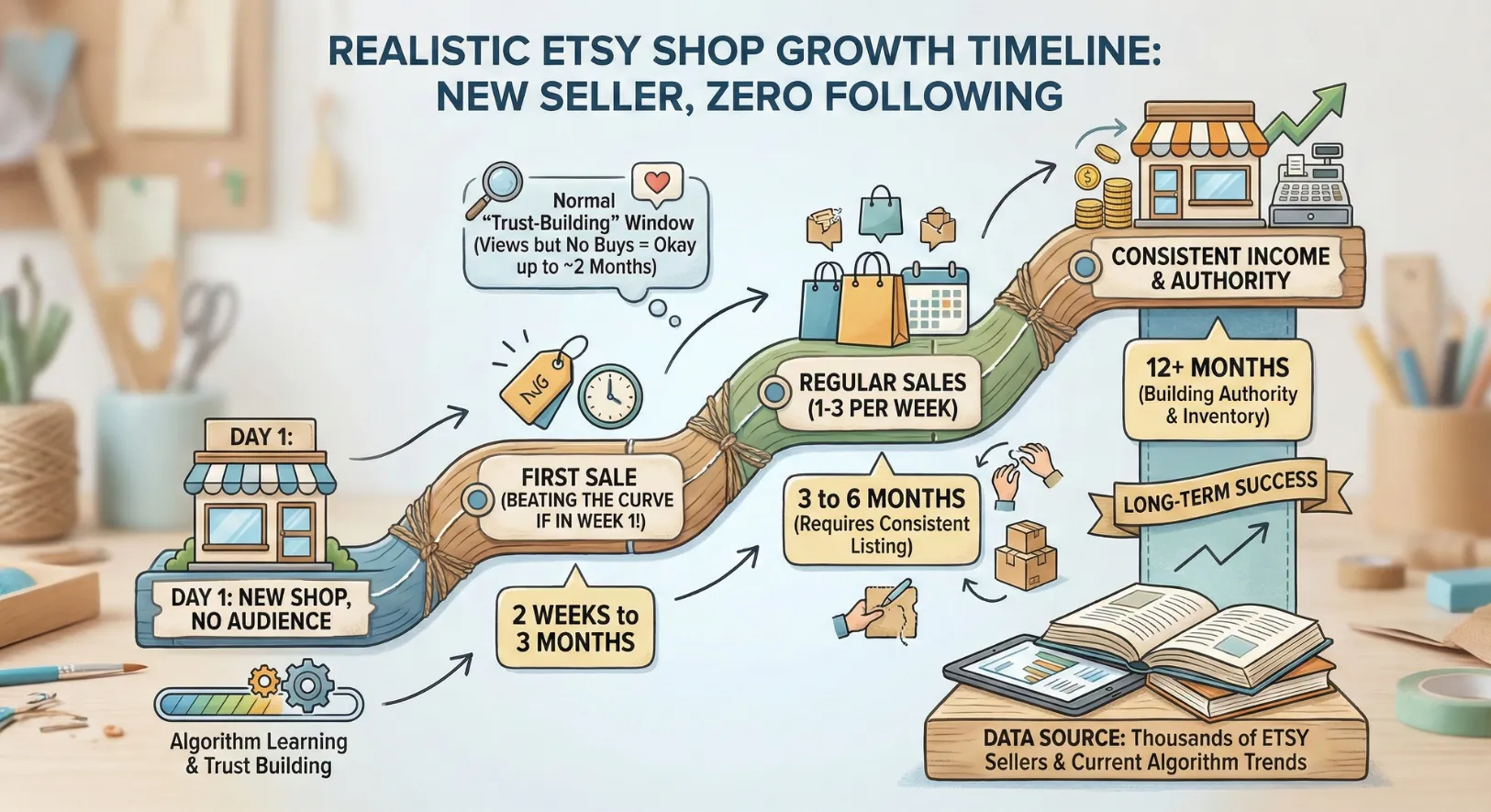
Based on data from thousands of sellers and current algorithm trends, here is a realistic breakdown for a brand-new shop with zero existing social media following:
- First Sale: Typically takes 2 weeks to 3 months.
- Regular Sales (1-3 per week): Often takes 3 to 6 months of consistent listing.
- Consistent Income: Usually requires 12+ months of building authority and inventory.
If you get a sale in your first week, you are beating the curve. If you are two months in with only views and no buys, you are likely still within the normal “trust-building” window.
02. The “Etsy Sandbox” Effect
One factor many new sellers overlook is how the search algorithm treats new shops. When you launch, Etsy doesn’t know who your ideal customer is yet.
It takes the algorithm roughly 30 to 60 days to “learn” your listings. During this time, Etsy is testing your products in different search results to see who clicks, who “Favorites”, and who buys.
Until the algorithm has enough data to know your conversion rate, it rarely ranks new shops on page one for high-traffic keywords. This period is often called the “sandbox.”

03. The 4 Factors That Speed Up (or Slow Down) Your Timeline
While waiting is part of the game, certain variables will dictate whether you sell in day 4 or day 90.
3.1. Listing Density
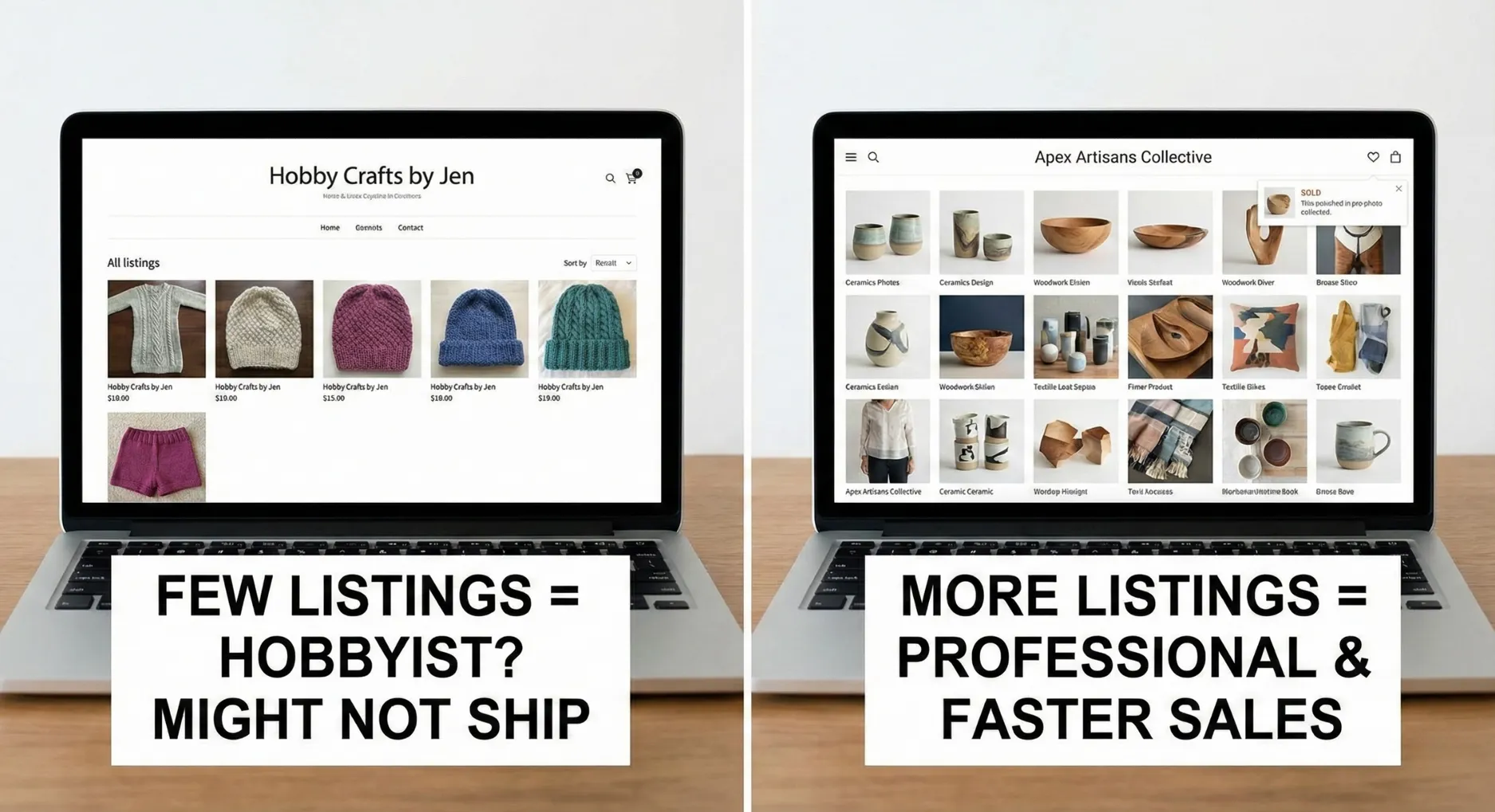
A shop with 5 items rarely looks trustworthy to a buyer. It looks like a hobbyist who might not ship on time. Shops that launch with (or quickly grow to) 20+ listings tend to see their first sale significantly faster.
More listings mean more keywords, more entry points for buyers, and a more professional storefront appearance.
3.2. The Trust Factor
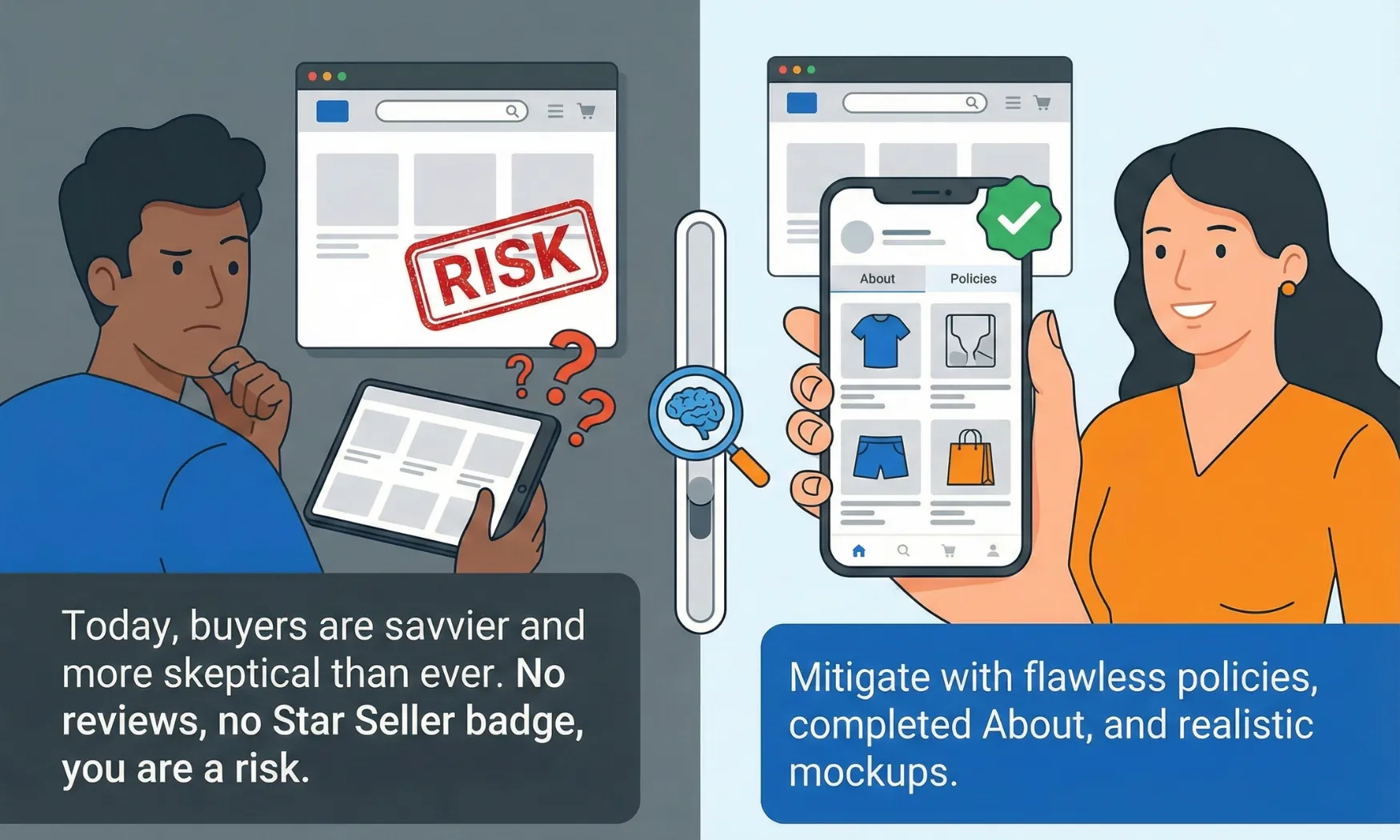
Today, buyers are savvier and more skeptical than ever. If your shop has no reviews and no “Star Seller” badge, you are at risk.
You can mitigate this by having flawless policies, a completed “About” section, and high-quality, realistic mockups. If your photos look generic or low-effort, buyers will scroll past.
3.3. Niche Saturation
Selling “gold hoop earrings” or “funny mugs”? You are competing with 500,000 other results. It will take longer to break through.
Selling “hand-painted DnD dice trays” or “custom embroidered greyhound fleece”? You will likely see sales faster because the competition is lower and the intent to buy is higher.

3.4. Pricing Strategy
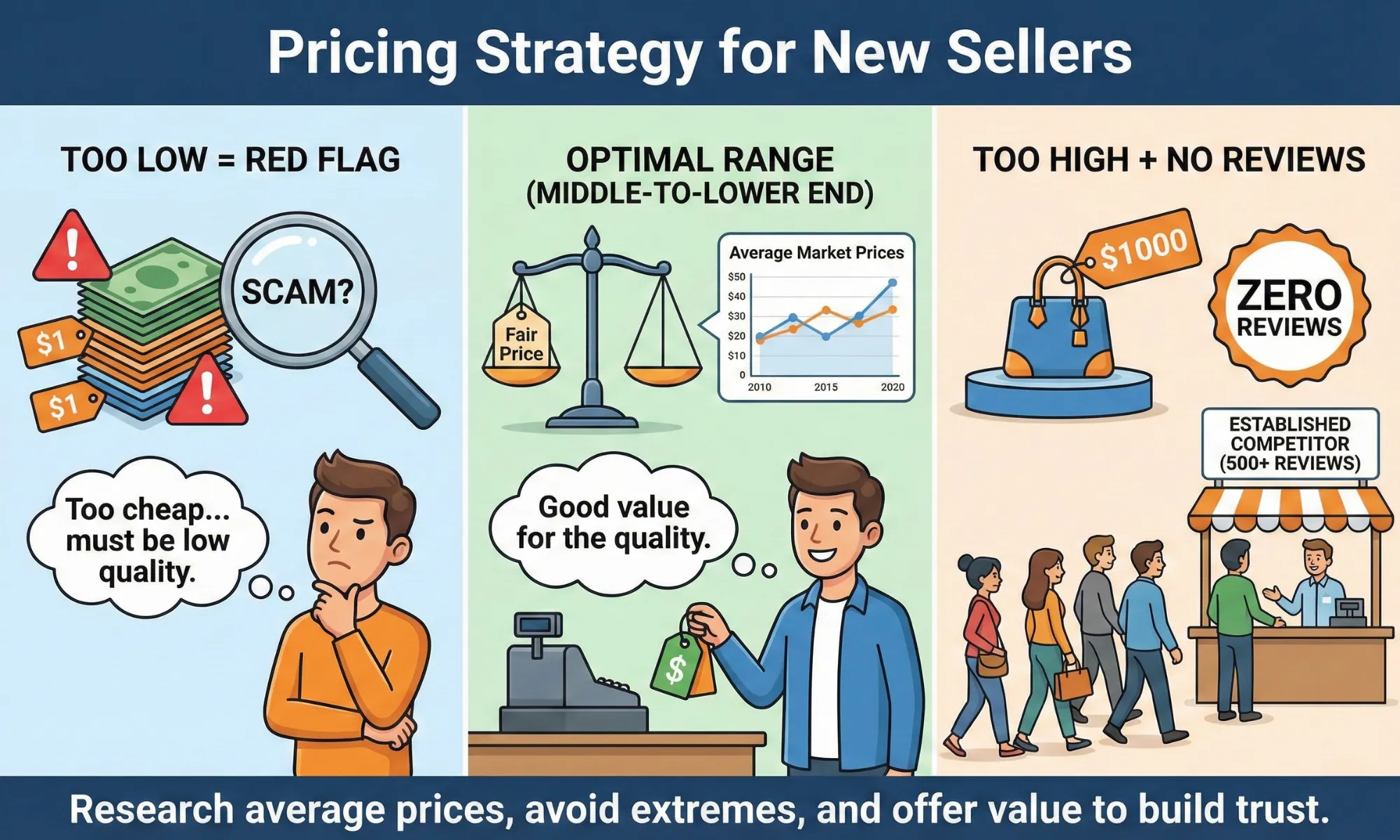
Many new sellers underprice their items thinking it will drive sales, but this can backfire. Prices that are too low can signal “low quality” or “scam.” Conversely, if you are priced at the top of the market with zero reviews, buyers will choose the established competitor.
Research the average market price and aim for the middle-to-lower end, but never undersell your worth just to get a sale.
04. What To Do While You Wait
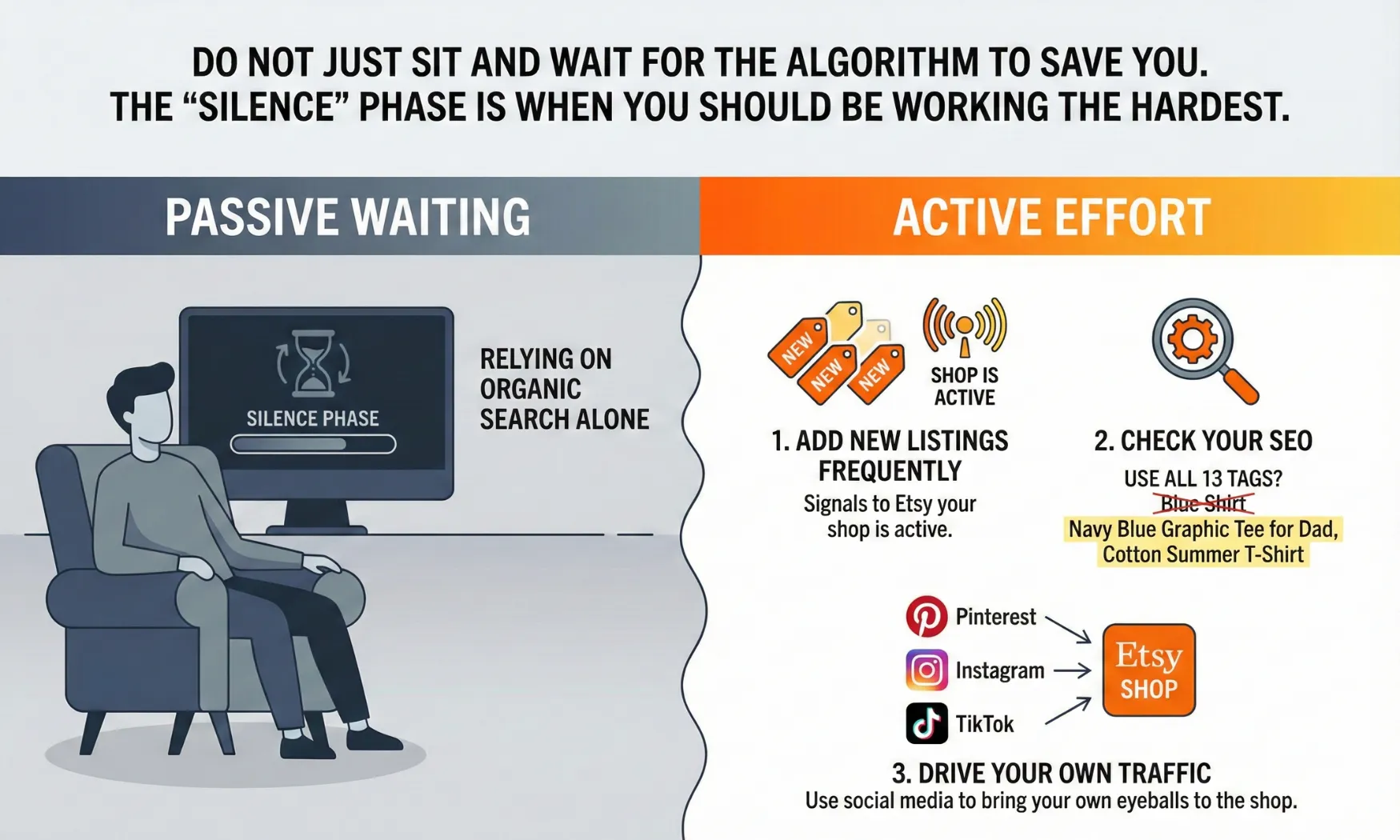
Do not just sit and wait for the algorithm to save you. The “silence” phase is when you should be working the hardest.
- Add new listings frequently. This signals to Etsy that your shop is active.
- Check your SEO. Are you using all 13 tags? Are your titles descriptive (e.g., instead of “Blue Shirt,” use “Navy Blue Graphic Tee for Dad, Cotton Summer T-Shirt”).
- Drive your own traffic. Since you can’t rely on organic search yet, use Pinterest, Instagram, or TikTok to bring your own eyeballs to the shop.
RELATED
- Etsy SEO Explained: How to Rank on Page One
- Why Your Etsy Shop Isn’t Getting Sales (And How to Fix It)
- Etsy Algorithm Secrets Every Seller Should Know
05. The Bottom Line
If you have been open for two weeks and haven’t made a sale, you are not failing. You are just starting.
Etsy is a marathon, not a sprint. The shops that are making six figures today likely spent their first three months sweating over their first ten sales. Keep listing, keep refining your photos, and give the data time to accumulate.
Enjoyed this post? Share it with your friends to spread the word! We’d love to hear your thoughts—drop your feedback in the comments below!
Also Read






Leave a Reply