One of the most common questions I get from aspiring sellers is, “Where should I start?”
It’s the classic e-commerce dilemma. You have a great product idea, maybe some designs ready to go, but you’re stuck at the crossroads of platform selection. Do you go with the massive, ready-made marketplace of Etsy, or do you build your own independent empire on Shopify?
The truth is, neither is inherently “better”—they serve very different purposes. It’s a lot like the difference between renting a booth at a busy craft fair versus renting your own retail storefront on a quiet street. One gives you foot traffic but follows strict rules; the other gives you total freedom but requires you to bring the customers yourself.
Let’s break down the pros, cons, and costs of each to help you decide which is right for your current stage of business.
Table of Contents
- Etsy: The Marketplace Giant
- The Pros
- The Cons
- Shopify: Your Own Digital Storefront
- The Pros
- The Cons
- The Cost Breakdown
- Bottom Line
RELATED
- Beginner’s Guide to Etsy Selling: From Setup to First Sale
- Why Your Etsy Shop Isn’t Getting Sales (And How to Fix It)
- How to Start a Profitable Etsy Shop Today: The New Rules of the Game
- How to Scale Your Etsy Shop Without Burning Out
01. Etsy: The Marketplace Giant
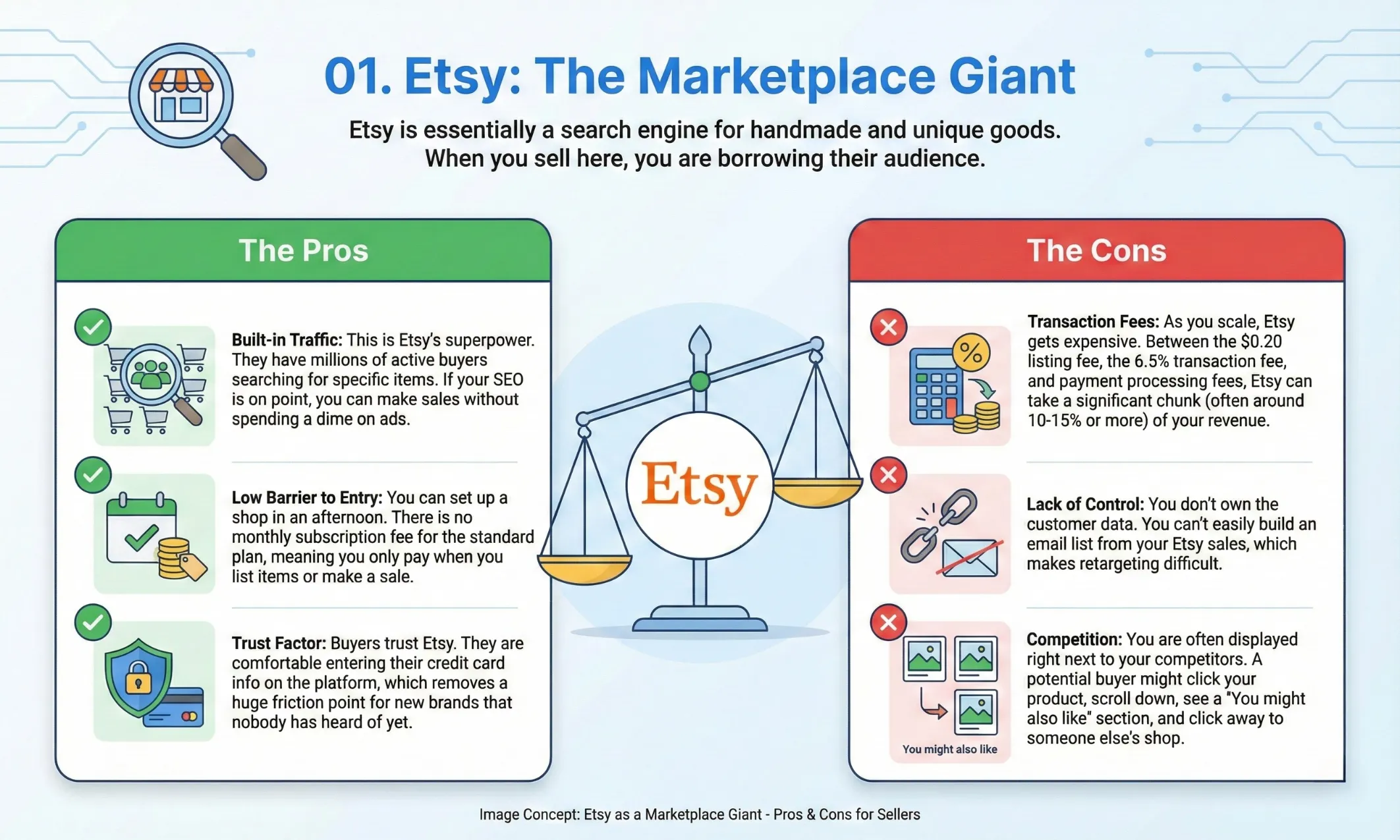
Etsy is essentially a search engine for handmade and unique goods. When you sell here, you are borrowing their audience.
The Pros
- Built-in Traffic: This is Etsy’s superpower. They have millions of active buyers searching for specific items. If your SEO is on point, you can make sales without spending a dime on ads.
- Low Barrier to Entry: You can set up a shop in an afternoon. There is no monthly subscription fee for the standard plan, meaning you only pay when you list items or make a sale.
- Trust Factor: Buyers trust Etsy. They are comfortable entering their credit card info on the platform, which removes a huge friction point for new brands that nobody has heard of yet.
RELATED
- How Long Does It Take to Get Sales on Etsy? Realistic Timelines
- Etsy Algorithm Secrets Every Seller Should Know
- Etsy SEO Explained: How to Rank on Page One
The Cons
- Transaction Fees: As you scale, Etsy gets expensive. Between the $0.20 listing fee, the 6.5% transaction fee, and payment processing fees, Etsy can take a significant chunk (often around 10-15% or more) of your revenue.
- Lack of Control: You don’t own the customer data. You can’t easily build an email list from your Etsy sales, which makes retargeting difficult.
02. Shopify: Your Own Digital Storefront
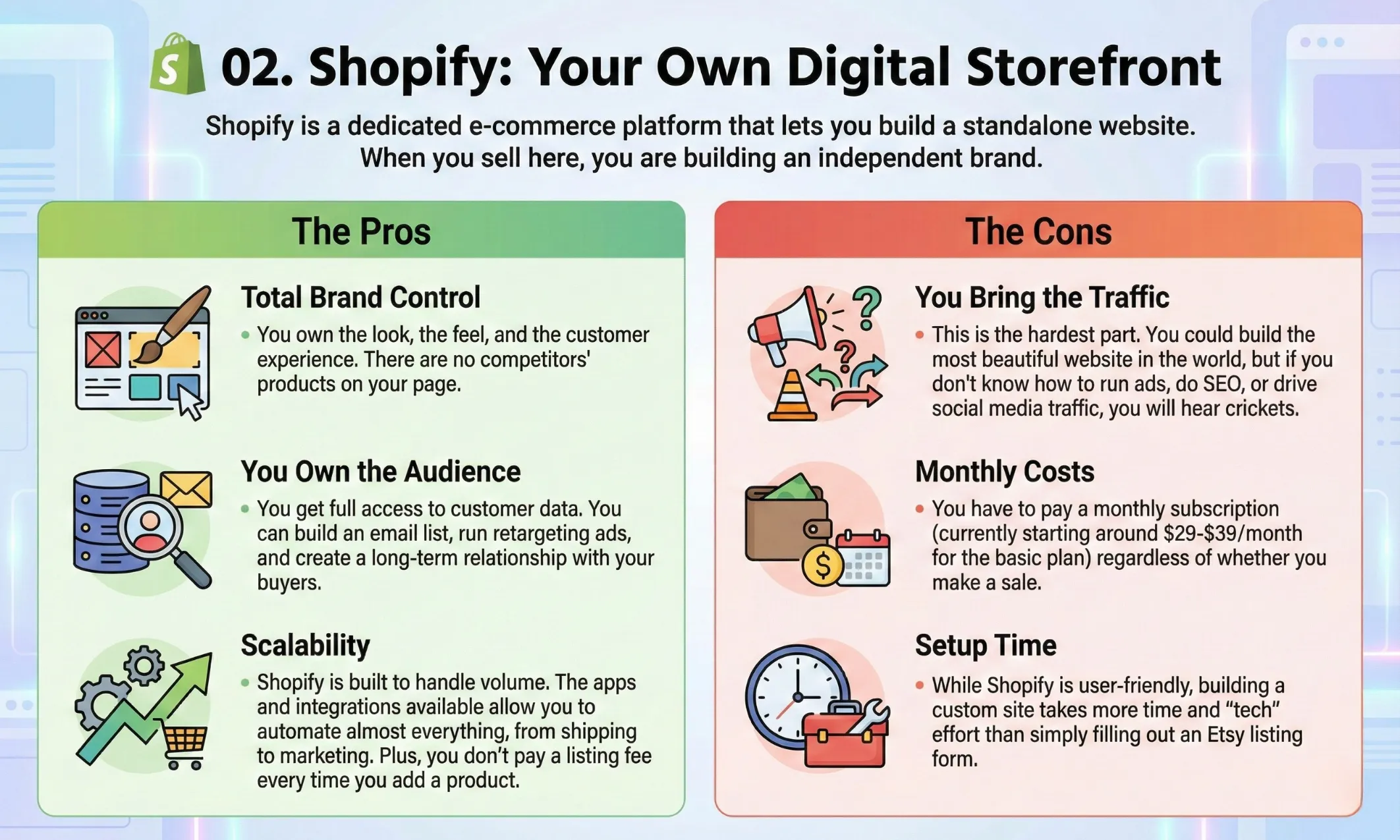
Shopify is a dedicated e-commerce platform that lets you build a standalone website. When you sell here, you are building an independent brand.
The Pros
- Total Brand Control: You own the look, the feel, and the customer experience. There are no competitors’ products on your page.
- You Own the Audience: You get full access to customer data. You can build an email list, run retargeting ads, and create a long-term relationship with your buyers.
- Scalability: Shopify is built to handle volume. The apps and integrations available allow you to automate almost everything, from shipping to marketing. Plus, you don’t pay a listing fee every time you add a product.
The Cons
- You Bring the Traffic: This is the hardest part. You could build the most beautiful website in the world, but if you don’t know how to run ads, do SEO, or drive social media traffic, you will hear crickets.
- Monthly Costs: You have to pay a monthly subscription (currently starting around $29-$39/month for the basic plan) regardless of whether you make a sale.
- Setup Time: While Shopify is user-friendly, building a custom site takes more time and “tech” effort than simply filling out an Etsy listing form.
03. The Cost Breakdown
Here is a simplified way to look at the money:
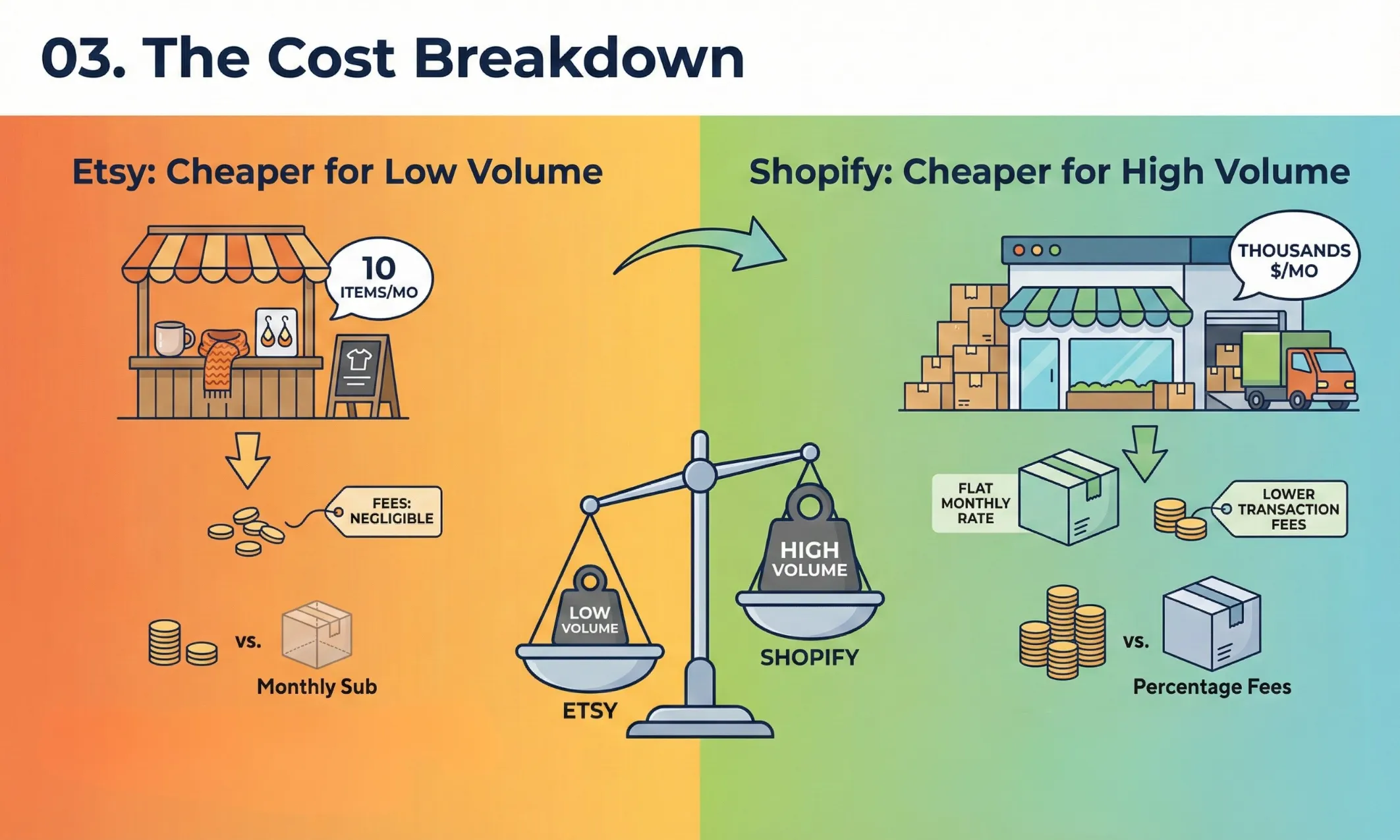
- Etsy is cheaper if you are selling low volume. If you sell 10 items a month, the fees are negligible compared to a monthly subscription.
- Shopify becomes cheaper at high volume. Once you are making thousands of dollars a month, Etsy’s percentage-based transaction fees will likely cost you more than Shopify’s flat monthly rate + lower transaction fees.
04. Bottom Line
So, which one should you choose?
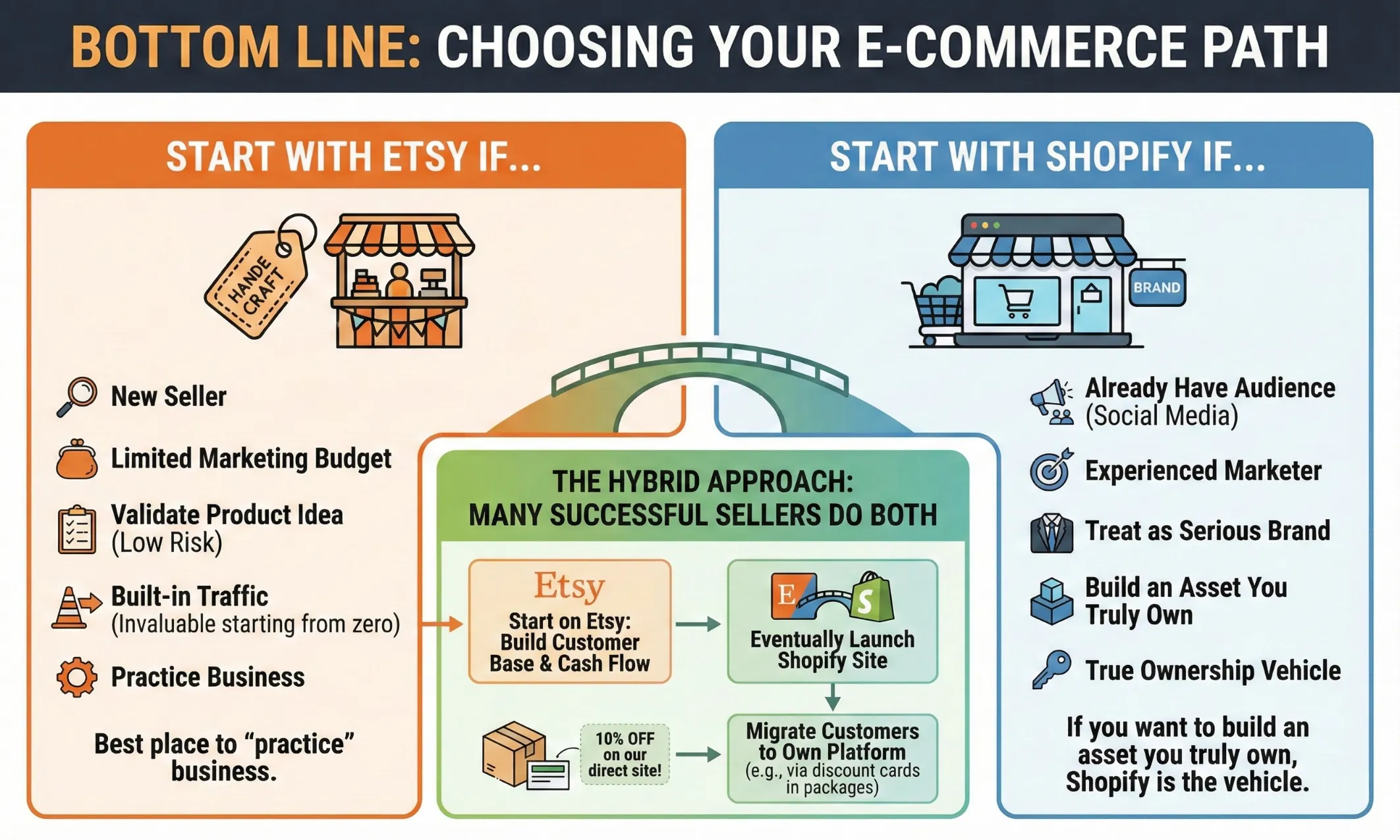
Start with Etsy if: You are a new seller, you have a limited marketing budget, or you want to validate a product idea with low risk. The built-in traffic is invaluable when you are starting from zero. It’s the best place to “practice” business.
Start with Shopify if: You already have an audience (like a social media following), you are an experienced marketer, or you are ready to treat this as a serious brand rather than a side hustle. If you want to build an asset you truly own, Shopify is the vehicle to do it.
The Hybrid Approach: Many successful sellers actually do both. They start on Etsy to build a customer base and cash flow, then eventually launch a Shopify site (often including a card in their Etsy packages offering a discount for their direct site) to migrate customers over to their own platform.
Choose the path that fits your current resources, but never feel like you’re stuck. The goal is to start selling, the platform is just the tool to get you there.
Enjoyed this post? Share it with your friends to spread the word! We’d love to hear your thoughts—drop your feedback in the comments below!
Also Read


Leave a Reply