

If there is a holy grail for Etsy sellers, it is the elusive “high-demand, low-competition” keyword. These are the specific search phrases that buyers are actively typing into the search bar, yet only a handful of sellers are actually targeting.
Finding them means you can rank on the first page faster, drive consistent organic traffic, and stop fighting tooth and nail against massive, established shops.
With Etsy’s algorithm shifting heavily toward natural language processing and AI-driven search, finding these keywords is no longer about guessing, it is about data.
Here is a step-by-step guide to uncovering the keywords that will actually move the needle for your shop.
Table of Contents
- Start with the “Autocomplete” Strategy
- Validate with Dedicated SEO Tools
- Drill Down into Long-Tail Phrases
- Spy on the Bestsellers (Competitor Analysis)
- Think About the “Why” and “Who”
RELATED
- Common Etsy SEO Mistakes Killing Your Traffic
- Etsy Tags vs Categories: What Matters More for SEO?
- How to Write Etsy Titles That Actually Convert
- Etsy SEO Explained: How to Rank on Page One
01. Start with the “Autocomplete” Strategy
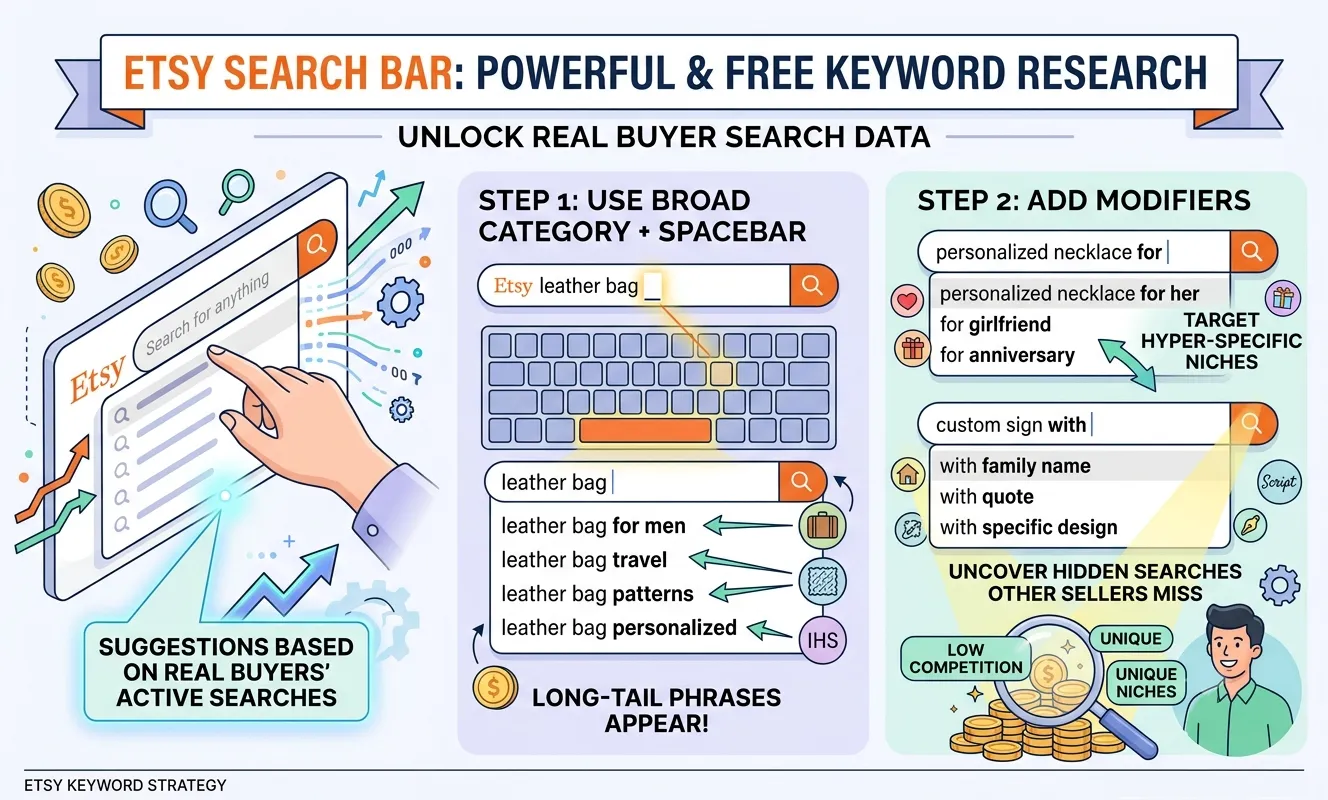
Etsy’s own search bar is one of the most powerful, free keyword research tools available. When you start typing a word, Etsy automatically suggests phrases in a drop-down menu. These suggestions are not random; they are directly based on what real buyers are actively searching for right now.
- How to use it: Type in your broad product category and hit the spacebar. Look at the long-tail phrases that appear.
- Add modifiers: Add words like “for,” “with,” or “custom” after your main keyword to uncover hyper-specific searches that other sellers might be missing.
02. Validate with Dedicated SEO Tools
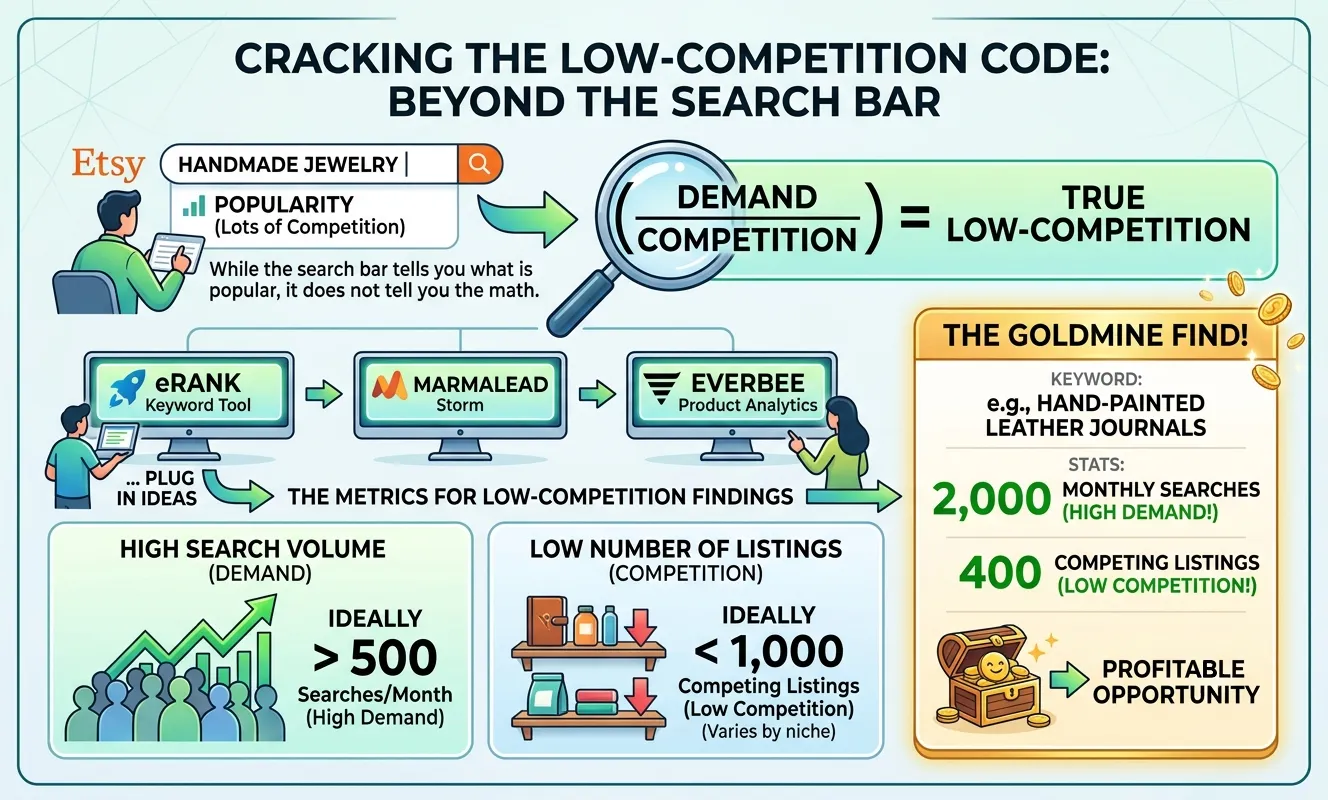
While the search bar tells you what is popular, it does not tell you the math. To truly find the “low-competition” side of the equation, you need to see the search volume (demand) versus the number of listings (competition).
Using tools like eRank, Marmalead, or EverBee allows you to plug in the ideas you found in the search bar and see the hard data.
- The Goal: Look for a high search volume (ideally over 500 searches a month) and a low number of competing listings (ideally under 1,000, though this varies by niche). If a keyword has 2,000 monthly searches but only 400 competing listings, you have found a goldmine.
03. Drill Down into Long-Tail Phrases
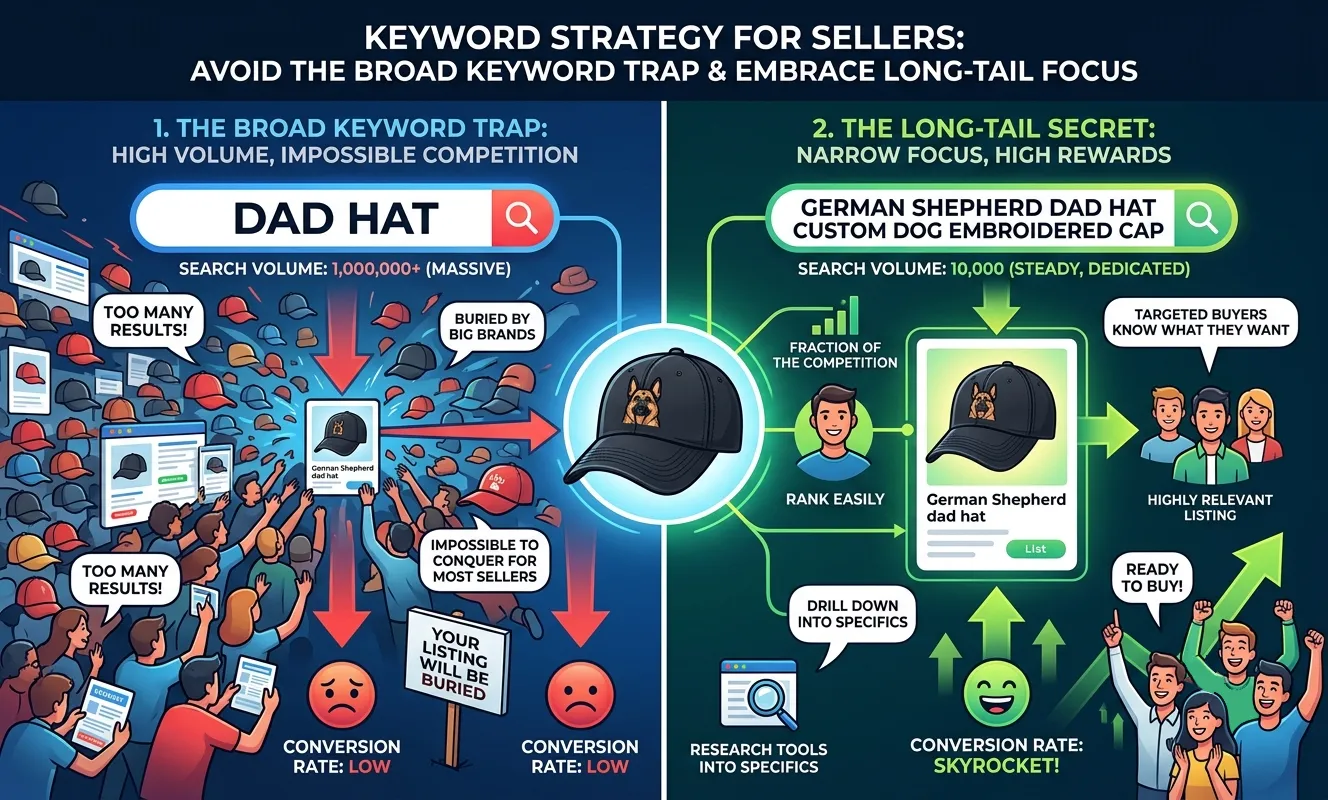
Broad keywords are a trap. They look great because they have massive search volumes, but the competition makes them impossible to conquer for most sellers. The secret is narrowing your focus.
To see how this works in practice, imagine you are launching a listing for an embroidered black German Shepherd dad hat. If you target the keyword “dad hat,” your listing will immediately be buried under hundreds of thousands of generic results. It is high demand, but the competition is insurmountable.
Instead, use your research tools to drill down into the specifics. You might discover that a long-tail phrase like “German Shepherd dad hat” or “custom dog embroidered cap” has a steady, dedicated search volume but only a fraction of the competition. Buyers typing those longer phrases know exactly what they want, which means your conversion rate will skyrocket when they find your highly relevant listing.
04. Spy on the Bestsellers (Competitor Analysis)
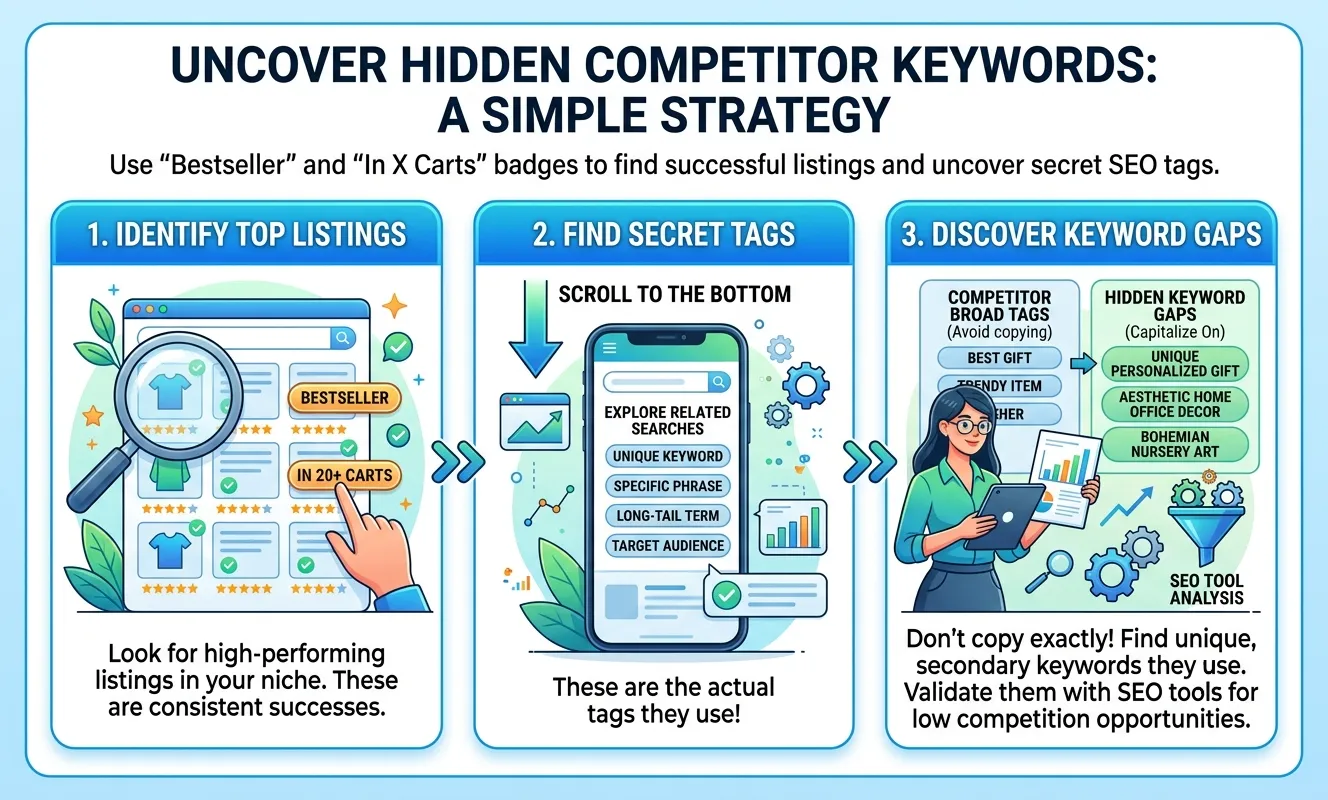
If a listing in your niche is consistently carrying a “Bestseller” or “In X Carts” badge, they are doing something right. You can use this to your advantage to uncover hidden keywords.
- Scroll to the bottom: Scroll to the very bottom of a top-performing competitor’s listing to see the “Explore related searches” section. These are the exact tags that seller is using.
- Find the gaps: Don’t copy their tags completely; they already dominate those broad terms. Instead, look for the unique, secondary keywords they are using and run them through your SEO tool to see if you can capitalize on them.
05. Think About the “Why” and “Who”
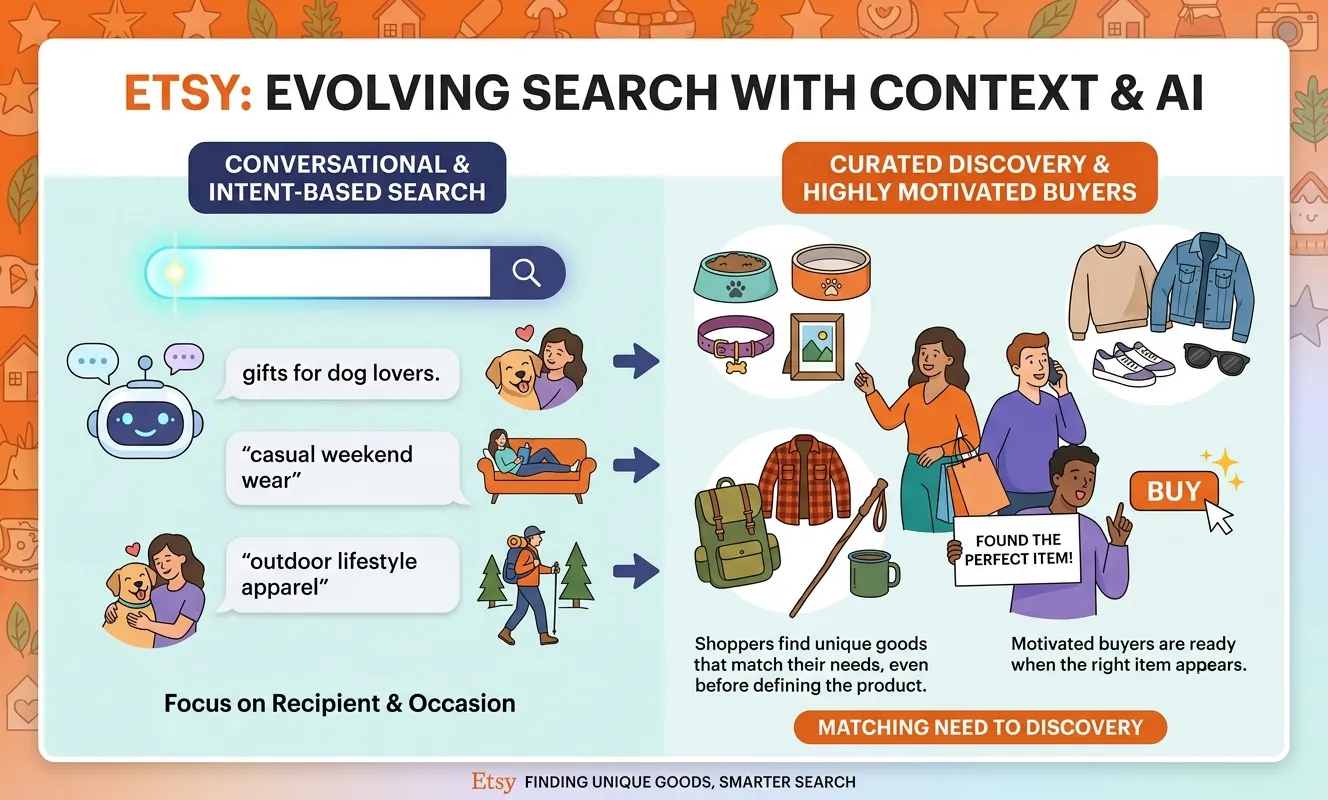
With the recent push into AI and conversational search, Etsy is focusing heavily on the context of a search. Shoppers don’t always search for what an item is; they search for what it does or who it is for.
Brainstorm keywords around the recipient and the occasion. Phrases like “gifts for dog lovers,” “casual weekend wear,” or “outdoor lifestyle apparel” can capture shoppers who haven’t even decided exactly what product they want yet, but are highly motivated to buy when they see the right item.
Final Thoughts
Keyword research is the foundation of a profitable Etsy shop, but it is not a “set it and forget it” task. Buyer trends shift, seasons change, and the algorithm constantly evolves. Make it a habit to audit your listings every few months.
By consistently replacing underperforming tags with fresh, data-backed, low-competition keywords, you ensure your products stay visible, relevant, and exactly where they belong, in front of buyers who are ready to pull out their credit cards.
Enjoyed this post? Share it with your friends to spread the word! We’d love to hear your thoughts—drop your feedback in the comments below!
Also Read






Leave a Reply